When we first sold our homes, which were across the street from one another, one had been meant to be a long term rental and morphed into an air bnb which was finally able to turn a small profit. We looked at the "sweat equity" of twenty years of home ownership and it was less than five dollars per hour that we had spent doing much needed repairs over the course of all those years we had owned them. More than that, we had to say goodbye to more than thirty six edible perennial plants that we had cultivated and nurtured on those properties which were providing great joy to us, food, beauty and wildlife habitat as well. During most of covid we lived in a spare bedroom at my sister-in-law's house which did not allow for much gardening or yard work, but now we have taken up residence in our new home which sits on 1.8 acres. We will continue to use our home as the base for ECO-Tours of Wisconsin Inc.That is not going to change.
The house is seventy-one years old and has been lived in pretty hard. In additon to replacing and/or renewing all the floors, we have added properly grounded outlets, a few newer and more efficient light fixtures, GFCI protection where needed and new supply lines for our water. Some drains have also been replaced correctly and the cleaning, painting and investment has not yet come to an end. So far, we have only attempted to work on the interior, so that we will have a comfortable space to live through the coming cold weather. We have already invested more than what my first home cost! We will have all new windows by next Spring and we are working to make the garage situation more efficient as well, putting it on the side of the house closest to the street so that we minimize the costs of clearing snow in winter and the fuel required to drive across our property every time we come or go.
Leaving behind the city by the bay, my wife's hometown, the location that held on to us and that we invested in for more than twenty years as a couple was much easier than one might have thought it would be. We are just ove half an hour away, so friends and family can reach us easily but the smog, hustle and traffic of the bigger city won't be missed. The cost of quiet is planning trips to town like a farmer might, making sure to combine activities and planning our route to not have to double back, ever, assures that when we go to town to make money, we also get as many small errands done as possible. Driving a half hour for one or two items would blow their cost through the roof, so even if we can't get something here in our new town, it is easier to learn to live without it than to make a special trip to find it. We also don't mind paying more for an item we really do require because that could save us a long drive and our time is precious. As with most things, while you are in the moment or performing the task, attention is required that also obscures other aspects of the picture. Moving on is an activity unique to itself. Interestingly, I have made more new friends in the town I had lived in since the Eighties, in just the past six months than I had made over the past six years! Again, proving the permacultural maxim that by perfecting the give away, or the give back, life becomes more rich, more diverse and more resilient.
We continue to welcome those who wish to learn about biochar, sustainability and permaculture. We have opportunities for people to learn about so many simple living skills, but you need to contact us prior to arrival and let us know what you want to learn about. In the coming years, we see ourselves becoming like the Foxfire living history museum, teaching by doing all the things our ancestors did to make a living. Gardening, putting up food for the cold months, harvesting what nature brings forth at the appropriate times and crafting the things we need from what resources abound locally. We also have many lifetimes worth of experience, because we learned from our elders how to manage the plants and animals around us so that we can have healthy food and to reciprocate the love that Mother Earth shows us in providing for our need. To this end, we want to share, again the best ways to reach us. e-mail:biocharmaster(at)gmail.com or check in by txt msg: (nine-twenty) double eight four-triple two four.
All-volunteer NPO (Non-Profit Organization). Money raised has helped us teach many hundreds of people about making and using biochar to sequester carbon much more quickly than we could do with tree planting alone. We are developing a traditional ways school based on ecological facts. Donations are always graciously accepted at, 1111Clark Street Algoma, Wisconsin 54201. We would love to develop a unique tour for you! Blessed BE!
ECO-Tours only purchases trees and dirt to plant them in...
Wednesday, October 12, 2022
Saturday, July 2, 2022
New Digs
At first, we see what we know, with repeated exposure and/or more intimate exploration, we find a more true nature of that which we see. When I walked in the room, I saw these lampshades as gourds. When I came close I was not sure, because all the gourds I know of have fairly thin skin. These are, in fact Earthenware, thown as a pear shape and then cut into this amazing lattice.
ECO-Tours of Wisconsin, Inc. is moving to a new location. We will be near the shore of Lake Michigan, just a half-dozen miles from the premier tourist area known as Door County. Our first concern is to make the home on site liveable and to add two bedrooms for travelers and guests who come for classes and tours. After that, we will begin documenting the natural ecotones on site and putting effort into a large classroom space so in the event of inclement weather, we can still teach our biochar classes. By the coming Spring, we will be actively reforesting and adding to permaculture management strategies, getting the fruit trees and vines back to their prolific state and infusing the land with many, many more perennial food and medicinal crops.
For our supporters and friends, it may seem odd that we have drastically pared back the size of our new center, but in light of rapidly escalating prices for everything, not just energy, we want to place our home base in a more central area, so that we can serve a greater number of people at drastically lower cost. Instead of asking our guests to treck many hours into the Northwoods of Wisconsin, we are locating just a day's bicycle ride from over a million potential guests. The air quality is much better than where we were located and the night skies are much more full of stars. Although it may not be the remote backwoods experience that "Up North" has to offer, we are within about an hour drive of one of the state's dark skies parks and can arrange transport and camping expeditions to that location for stargazers and those who have not yet seen the Milky Way or Northern Lights. Kayaking opportunities abound and as we are located about a day's walk from the Eastern Terminus of the Ice Age Trail, those who want to hike have ample chance to find peace and quiet there as well.
UPDATE: We have been at our new location for about a month. We remain focused on the inside, it took months of Nancy and I working every spare minute to get it back to move in ready, but we are a little flexible in what that means. When we go to town, we still bring a load or two of laundry, our chest freezer is still at the old pod. We have planted about a half dozen things, like rhubarb and elderberries which had been in pots, some given to us, some purchased with gracious donations from supporters. As we do begin making holes in the ground, it seems that this will be an excellent property on which to showcase biochar and the effects of re-generation. Carbon sequestration will be meticulously documented and the results will be obvious. Each time we get a read on soil quality in different areas, we gain understanding of where we are, our place is based on the soil and in this spot, there are places with precious little of that. We will practice our own version of ecological triage, deciding what will remain impacted and what can be easily recovered, focusing resources on places that our intervention makes the greatest difference. I work hard to bring salient messages to this blog and for many reasons I have sought to keep it free and available. If you appreciate that, my paypal account number is the same as my e-mail. t (as in Tony) n (as in Nancy) saladino42 at (because We're old school) hotmail dot com.
For our supporters and friends, it may seem odd that we have drastically pared back the size of our new center, but in light of rapidly escalating prices for everything, not just energy, we want to place our home base in a more central area, so that we can serve a greater number of people at drastically lower cost. Instead of asking our guests to treck many hours into the Northwoods of Wisconsin, we are locating just a day's bicycle ride from over a million potential guests. The air quality is much better than where we were located and the night skies are much more full of stars. Although it may not be the remote backwoods experience that "Up North" has to offer, we are within about an hour drive of one of the state's dark skies parks and can arrange transport and camping expeditions to that location for stargazers and those who have not yet seen the Milky Way or Northern Lights. Kayaking opportunities abound and as we are located about a day's walk from the Eastern Terminus of the Ice Age Trail, those who want to hike have ample chance to find peace and quiet there as well.
UPDATE: We have been at our new location for about a month. We remain focused on the inside, it took months of Nancy and I working every spare minute to get it back to move in ready, but we are a little flexible in what that means. When we go to town, we still bring a load or two of laundry, our chest freezer is still at the old pod. We have planted about a half dozen things, like rhubarb and elderberries which had been in pots, some given to us, some purchased with gracious donations from supporters. As we do begin making holes in the ground, it seems that this will be an excellent property on which to showcase biochar and the effects of re-generation. Carbon sequestration will be meticulously documented and the results will be obvious. Each time we get a read on soil quality in different areas, we gain understanding of where we are, our place is based on the soil and in this spot, there are places with precious little of that. We will practice our own version of ecological triage, deciding what will remain impacted and what can be easily recovered, focusing resources on places that our intervention makes the greatest difference. I work hard to bring salient messages to this blog and for many reasons I have sought to keep it free and available. If you appreciate that, my paypal account number is the same as my e-mail. t (as in Tony) n (as in Nancy) saladino42 at (because We're old school) hotmail dot com.
Thursday, February 17, 2022
What is the Nature of Soil?
One of the most fundamental ways of looking at soil is to determine what the main ingredients are. Some soil contains rocks and gravels and it has been determined that anything bigger than 2mm is just a contaminant in soil. Rocks, stones and gravel are considered by soil scientists to be too large to be considered. So, first we have to screen soils through a 2mm mesh to see what portion of the ground beneath our feet is really soil and how much is just a contaminant. I have tried growing a garden on gravelly ground and the plant that did best there is purslane. Sadly, at the time, I didn't know it as a nutrient dense food crop, but I did know that it composted easily and turned it into compost for years, until I could build enough soil to grow other plants for food. Like most living things in soil, which I will discuss later, I have the tenacity to not give up, not give in to pressure, but to hold out long enough for conditions to improve. I put forth as the primary nature of soil to contain and express the deepest level of tenacity our human brains can fathom. Let's not get ahead of ourselves...
The most important information to get about soil is what on earth is making up the mass? Luckily, the simplest and most profound question can be answered with a simple and profound test. Take a handful or two of soil, put it in a clear container that is taller than it is wide, fill the container with water, put a lid on it and shake. let it sit overnight or up to several days or weeks until the water has cleared and you will see three separate and distinct layers in the vessel. At the bottom will be sand. These are the largest soil particles, so they fall out of suspension first. The middle section will be silt which ranges from as small as two thousandths of a centimteter all the way up to five hundreths of a cm. Finally the topmost layer will be clay, particles smaller than two thousandths of a cm. I recently heard an interesting way to think about these relative sizes. tiny numbers really don't tell the story, especially when you get down to sizes we can't even see. Think of it this way, if the smallest particles were the size of BBs or marbles, the middle sized particles would be the size of basketballs or beach balls and the large particles would be the size of a chair. Typically, these three ingredients make up over 95% of the soil.
Of course with any hard and fast rule, there are major exceptions. Organic material in the soil, which is often seen as bubbles on the surface of the water used in the previous test, can become a large percentage of the soil, but then it is either called peat or muck. Peat being derived from mosses and growing organic sources and muck being from lake sediments, or detritus (like the waste bin of nature)Across most of the developed world, many soils have been tilled so agressively that no organic material is left in them, less than one percent organic material is frequently seen but it is an extremely dangerous condition for soil. At that point it is more accurately called dirt. It will easily erode with either wind or rain, without a thick mulch layer or some growth and living roots to hold the material together and protect it from rain and sun. Each component of soil is good for some things and terrible for others, so having a good mix is best. If you have a single material dominant it raises management issues but any soil can be worked with. My own personal preference is clay, but the management of that type of soil is just as quirky as would be a predominantly silt or sand soil.The difference is that I have learned to respect the limitations of my clay soil. Sand drains like crazy, which is normally very good, but it presents a problem in that it drains so easily that it is hard to keep soil misture even enough to get plants to grow well.sand also very seriously flirts with contaminating surface and ground water because any nutrients applied to the soil can be washed away because the matrial drains so freely. It can also be a challenge because many organisms will find it difficult to stick around when the soil routinely goest through extreme wet and dry cycles. This also can mean huge variations in surface temperature as well, especially if mulch cover in not maintained.
Silt provides much more surface area which can be available for the soil microbiome to flourish upon and although it drains more slowly and provides more opportunity for life to thive than sand can, it can also be threatened by tilling or not enough nutrients. Most people hate clay because mor ethan likely they inherited poorly managed clay, as I did. It had been seriously compacted through consistently poor management and in large areas it was just lifeless. Although clay can provide the most habitat for soil microbes of all the soils, any land manager who has to deal woith them needs to understand their limitations as well. Most often the limiting factors are the ability to get air and water down into the soil. If water can't even penetrate the soil, it can only run off and it will take some clay particles and nutrients with it as well. The best thing in all three cases mentioned above is to add either compost (or other organic material) for organic carbon or mineral carbon with microbes in the form of biochar. I make the distinction betewwn the two because material that was once living releases most of its carbon over the course of about four years, ninety percent leaves the soil. Mineral carbon is not a food source for any soil organism, nor will it break down if eaten and excreted by soil dwelling creatures. It remains unchanged for hundreds of centuries, continuing to provide habitat for soil organisms. This small but vital part of soil, organic and inorganic carbon are what allows soil to be healthy, well-drained and able to withstand drought. The living and dead roots, provide some large structures that increase porosity, but it is the living organisms and th edead organic meterial they eat, as well as what they excrete that make soil vital and healthy. In soil the tiny percentage of living organic material does most of the work feeding the plant roots and providing smaller structures that allow air and wate rto be available enough under the soil surface to create a rich habitable zone within which millions of other life ofrms co-exist. The most true nature of soil is to be the ultimate team player, providing opportunity and the synergy that comes from diversity and abiding by terms of the give back or give away. When soil is treated badly enough, it often just goes away.
Of course with any hard and fast rule, there are major exceptions. Organic material in the soil, which is often seen as bubbles on the surface of the water used in the previous test, can become a large percentage of the soil, but then it is either called peat or muck. Peat being derived from mosses and growing organic sources and muck being from lake sediments, or detritus (like the waste bin of nature)Across most of the developed world, many soils have been tilled so agressively that no organic material is left in them, less than one percent organic material is frequently seen but it is an extremely dangerous condition for soil. At that point it is more accurately called dirt. It will easily erode with either wind or rain, without a thick mulch layer or some growth and living roots to hold the material together and protect it from rain and sun. Each component of soil is good for some things and terrible for others, so having a good mix is best. If you have a single material dominant it raises management issues but any soil can be worked with. My own personal preference is clay, but the management of that type of soil is just as quirky as would be a predominantly silt or sand soil.The difference is that I have learned to respect the limitations of my clay soil. Sand drains like crazy, which is normally very good, but it presents a problem in that it drains so easily that it is hard to keep soil misture even enough to get plants to grow well.sand also very seriously flirts with contaminating surface and ground water because any nutrients applied to the soil can be washed away because the matrial drains so freely. It can also be a challenge because many organisms will find it difficult to stick around when the soil routinely goest through extreme wet and dry cycles. This also can mean huge variations in surface temperature as well, especially if mulch cover in not maintained.
Silt provides much more surface area which can be available for the soil microbiome to flourish upon and although it drains more slowly and provides more opportunity for life to thive than sand can, it can also be threatened by tilling or not enough nutrients. Most people hate clay because mor ethan likely they inherited poorly managed clay, as I did. It had been seriously compacted through consistently poor management and in large areas it was just lifeless. Although clay can provide the most habitat for soil microbes of all the soils, any land manager who has to deal woith them needs to understand their limitations as well. Most often the limiting factors are the ability to get air and water down into the soil. If water can't even penetrate the soil, it can only run off and it will take some clay particles and nutrients with it as well. The best thing in all three cases mentioned above is to add either compost (or other organic material) for organic carbon or mineral carbon with microbes in the form of biochar. I make the distinction betewwn the two because material that was once living releases most of its carbon over the course of about four years, ninety percent leaves the soil. Mineral carbon is not a food source for any soil organism, nor will it break down if eaten and excreted by soil dwelling creatures. It remains unchanged for hundreds of centuries, continuing to provide habitat for soil organisms. This small but vital part of soil, organic and inorganic carbon are what allows soil to be healthy, well-drained and able to withstand drought. The living and dead roots, provide some large structures that increase porosity, but it is the living organisms and th edead organic meterial they eat, as well as what they excrete that make soil vital and healthy. In soil the tiny percentage of living organic material does most of the work feeding the plant roots and providing smaller structures that allow air and wate rto be available enough under the soil surface to create a rich habitable zone within which millions of other life ofrms co-exist. The most true nature of soil is to be the ultimate team player, providing opportunity and the synergy that comes from diversity and abiding by terms of the give back or give away. When soil is treated badly enough, it often just goes away.
Sunday, February 6, 2022
Shameless Plea
We are getting ready to preserve nearly two acres and transform it, like we did our last two properties, into a permacultural wonderland of native, edible and medicinal perennials, pollenator gardens and habitat for a variety of creatures. On our second walk-through at the property, we frightened a muskrat who looked fat and happy but for the fact that he was awakened and had to run a long way for cover. We would definitely improve that critter's habitat! Our earlier goal of saving 80 acres remains our ultimate goal, but this property has an established caretakers home and two greenhouses. We would have to raise four times as much money to build in all those improvements on 80 acres. Not to mention the infrastructure needed to even set up such a facility. As an added bonus, instead of being 3-5 hours from major population centers, there will be a million people within bicycling distance! Talk about offsetting carbon footprints!Even more interestingly, we will be just of fth eIce Age Trail and will be able to offer no trace camping to through hikers!
Trouble is, I'm not going to sugar coat it, money. Due to covid-19, it has been two full years of less than half my normal professional gig that allows me to fund the work that ECO-Tours has done. We are adept at soil restoration and teaching about how to make and use biochar. Spreading seed and re-establishing native cover. There have been many events where contributions have covered gas or lunch, but often not both. We can afford to operate on exremely small budgets, whether we are tree planting, seed collecting and dispersing, teaching classes or doing intrerpretive programs because our labor and management have always been 100% volunteer. It took us our first ten years to do, but we planted 60,000 tree seedlings across Northeast Wisconsin and we raised less than six thousand dollars a year during those years.
We were able to do it because we got creative. One of us would wait around, until after pick-up hours at the annual Department of Natural Resources tree seedling distribution event, many years hundreds of trees came home with us that otherwise would have been thrown into the compost. In fact, the year before the first year we put in our order, I had been walking past the greenhouses at the County Extension Offices. Out back I found over 2,000 tree seedlings in their compost. We took them home. potted them up and it took a while, but we got nearly all of them set out into permanent and appropriate places, their forever homes, within that first spring and fall. After I found that treasure, I went and asked why they had thrown them out and they said that every year, when they did the DNR tree seedling sale, some live plants would not get picked up and they didn't have any way to store them or hold them for later pick up, so they just put them in the compost pile.
I made sure after that to always show up at the beginning of the day to help set up, then to fill my order as late in the day as possible, so I could help after they shut down. After two or three days of getting people paired with their orders for pick up, everyone woul dbe pretty tired and the idea of taking a hundred or a thousand trees home ot plant is too much for anyone to think about, unless you are someone with friends who will help pot them up and eventuqally come help plant them out on another day, which we did. Inevitably there would be at least a few dozen left over seedlings. Most times there were many hundreds and once or twice over a thousand free trees to help keep our costs down. The real value was in all the loving hands that helped pot them all up and those loving hands that came later and lovingly placed them in the ground. Indeed, the loving hands of those who pulled competing weeds were also necessary to have the thousands of sucessful trees, spread across many hundreds of acres that would have never grown without the participation of many hundreds of people who care.
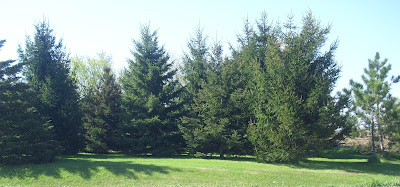
The reason that I mention this is to point out that rather than contributions being eaten up by administrative or fund-raising costs, our dollars flow with power and immediacy to what needs funding, not advertizing and gala events for megadonors. Give what you can. If you would like to stay in the loop about our events, which are mostly centered around Wisconsin let us know at: biocharmaster@gmail.com or if you would lik eot purchase a class, We can teach you everything you need to know to make top quality biochar in just a few hours by phone or online through zoom or fblive. Any contribution of fifty or more gets you a class if you would like to start sequestering carbon forever. If you are having trouble with our paypal link, you can go there directly and use our account number, tnsaladino42@hotmail.com or, you can go to our gofundme page and contribute to "Save 80 acres of Wisconsin for outdoor school". These trees were some of the first we planted and this image is from ten years ago. The last time I was past the farm, they were taller than the house! They are also large enough now to shade the west side of the house from summer sun and winter wind. The energy savings alone is like offsetting carbon use that is now unnecessary. In very real ways, we continue to prove that the best time to plant a tree is twenty years ago, the second best time is today!
Again, please contribute what you can.
Trouble is, I'm not going to sugar coat it, money. Due to covid-19, it has been two full years of less than half my normal professional gig that allows me to fund the work that ECO-Tours has done. We are adept at soil restoration and teaching about how to make and use biochar. Spreading seed and re-establishing native cover. There have been many events where contributions have covered gas or lunch, but often not both. We can afford to operate on exremely small budgets, whether we are tree planting, seed collecting and dispersing, teaching classes or doing intrerpretive programs because our labor and management have always been 100% volunteer. It took us our first ten years to do, but we planted 60,000 tree seedlings across Northeast Wisconsin and we raised less than six thousand dollars a year during those years.
We were able to do it because we got creative. One of us would wait around, until after pick-up hours at the annual Department of Natural Resources tree seedling distribution event, many years hundreds of trees came home with us that otherwise would have been thrown into the compost. In fact, the year before the first year we put in our order, I had been walking past the greenhouses at the County Extension Offices. Out back I found over 2,000 tree seedlings in their compost. We took them home. potted them up and it took a while, but we got nearly all of them set out into permanent and appropriate places, their forever homes, within that first spring and fall. After I found that treasure, I went and asked why they had thrown them out and they said that every year, when they did the DNR tree seedling sale, some live plants would not get picked up and they didn't have any way to store them or hold them for later pick up, so they just put them in the compost pile.
I made sure after that to always show up at the beginning of the day to help set up, then to fill my order as late in the day as possible, so I could help after they shut down. After two or three days of getting people paired with their orders for pick up, everyone woul dbe pretty tired and the idea of taking a hundred or a thousand trees home ot plant is too much for anyone to think about, unless you are someone with friends who will help pot them up and eventuqally come help plant them out on another day, which we did. Inevitably there would be at least a few dozen left over seedlings. Most times there were many hundreds and once or twice over a thousand free trees to help keep our costs down. The real value was in all the loving hands that helped pot them all up and those loving hands that came later and lovingly placed them in the ground. Indeed, the loving hands of those who pulled competing weeds were also necessary to have the thousands of sucessful trees, spread across many hundreds of acres that would have never grown without the participation of many hundreds of people who care.
The reason that I mention this is to point out that rather than contributions being eaten up by administrative or fund-raising costs, our dollars flow with power and immediacy to what needs funding, not advertizing and gala events for megadonors. Give what you can. If you would like to stay in the loop about our events, which are mostly centered around Wisconsin let us know at: biocharmaster@gmail.com or if you would lik eot purchase a class, We can teach you everything you need to know to make top quality biochar in just a few hours by phone or online through zoom or fblive. Any contribution of fifty or more gets you a class if you would like to start sequestering carbon forever. If you are having trouble with our paypal link, you can go there directly and use our account number, tnsaladino42@hotmail.com or, you can go to our gofundme page and contribute to "Save 80 acres of Wisconsin for outdoor school". These trees were some of the first we planted and this image is from ten years ago. The last time I was past the farm, they were taller than the house! They are also large enough now to shade the west side of the house from summer sun and winter wind. The energy savings alone is like offsetting carbon use that is now unnecessary. In very real ways, we continue to prove that the best time to plant a tree is twenty years ago, the second best time is today!
Again, please contribute what you can.
Wednesday, February 2, 2022
Imbolc Blessings
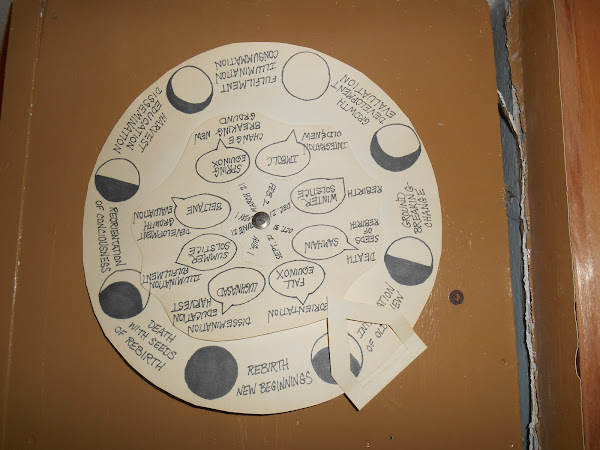
The proverbial back of Winter has been broken this week. The Sun is on the way back to our hemisphere. The "Flaming Arrow" of our shared human spirit is on her way back from the underworld. This spirit, more recently described by the name Brigid, has a corollary in Persephone. Fertility, renewal, inspiration and crafts all flow from the burnig fires she brings forth after she has been impregnated in the dark. Her feminine aspect going, during the dark time, to the deep, mythic subterranian realm. As the days quicken, nights grow shorter and the sun angle continues to rise, higher and higher, the promise of Spring's arrival, no matter what a select rodent might think, will come in about six weeks.
In the Celtic Calendar, this was the New Year Celebration a feast day, a night of bonfires, reflections on th epassing of last year's struggles and re-commitment to what is coming so quickly upon us. In preparation for Summer's flush, the season was determined mostly by the birthing of young livestock, the coming in of the milk for the herds. Modern humans may not want ot admit that they feel these stirrings, but we had an unbroken rhythm to our lives back to our earliest ancestors that ran by the intricate workings of th eseasons, not just a mechanical clock and a raster of days. The punctuation of life was that every six weeks or so, throughout the year, some sort of reason to get out, be amonst the neighbors and to celebrate were the touchstones of time.
Monday, January 24, 2022
Conscientious Vandal
I made a copy of the Earth Charter. It is a meaningful enough document that I wish everyone would read and understand it. You can jump to their site by follwing the link
In any effect, I copied the document and cut each section and subsection into small slips of paper. Each of the tiny slips of paper had one recommendation from the Earth Charter on them. Then, when I wanted to leave a mark, I would just glue one onto a bathroom stall, a sign post or bus stop, picnic bench, tree or table etc. Wherever people are stranded in one place for a minute or three, they can at least read up about positive steps we each can take to live in harmony with the planet. After showing a friend my idea, he branded me Conscientious Vandal. We had been joking about how odd it is to see so many breasts and penises rendered in spray pain in public spaces. Interestingly, some of the most profound words I ever read were scrawled on a wall in Milwaukee. "Death is the greatest trip of all, that's why they save it 'til last." was what it said. The older I get, the more I hope those words are true. I've had so many great trips in life, I truly hope they are topped by my exit. I remeber back when I was a young man in highschool, I had gotten a contract to help paint a mural on a local, concrete structure that held the mountain back, so it would not collapse into the street. Like a massive terrace, the three sided structure was trapezoidal, having two giant triangles on either end and a broad, more than twenty foot wide central portion. The triangular ends sort of buttressed against the weight of the hill, pushing back against gravity's pull. When you stood back even three or four blocks, looking across form th eother sid eof th evalley, you could see the giant wall. Looking back, maybe that's why I feel like I have had my fill of painting on concrete.
I tried to get a friend to help with the painting, a giant pod of whales with one whale appearing to swim right out of the wall, my friend, who has passed away now said he would not deface concrete because some craftsman made that wall, over a hundred years before and that the guy who finished the concrete had done such a great job that he could feel th epride he took in that surface. His legacy was perfect concrete and it woul dliterally last forever, if left alone. He felt that our artwork was stiull graffitti, degrading it for the sake of a fleeting moment of proving your own passing. I suppose both interpretations are valid. The local arts council had money to spend though and it kept us from getting into trouble. About a dozen people all pulled together and painted it over the course of several weeks and it certainly brightened the neighborhood. Where there had been a dingey gray slab, a pop of color and destination for people to recognize was created for not much more than the cost of the paint. I think the regional artist who designed it got a grand for his art, and for transferring it to the wall in a line drawing and the two leads they chose to guide the volunteers got 250 each and we were primarily there to paint and make sure that different areas of color, as laid out by the atists matched the original work of art. I suppose, even back then I was being a conscientious vandal.
Wednesday, January 12, 2022
Maturation
This is where things get tricky. Life requires several things and to be healthy it needs all of them in relatively equal measure. Habitat is a biggie because there must be several things for optimal growth and reproduction. The char provides that. Like a condo complex for soil microbes, the habitat is there, all fourteen acres of surface area per handful. Resources include food and moisture, a place to be safe, to reproduce, to consume nutritious materials and to excrete waste and exchange gasses. The more air and water you can keep on and in the char, the better. Again, without pooling water and ideally, warm enough for microbes to multiply. When conditions are right, it will keep you busy stirring the material three or more times a day. When weather turns cool, you may only need to mix the material once a day, or even less if things freeze up. Some bacteria can colonize and exponentially grow and reproduce in a matter of hours, and folding them through the vast surface area in char requires presenting many hundreds of chances for the surfaces to be jumbled. Since microbes are pretty much immobile on the scales that exist in the char, you will be required to spread the microbes physically turning and mixing the material.
The fastest I have been able to transform char into biochar is about six weeks. The conditions were optimal and it was during summer when I paid close attention to it several times each day, stirring, adding more minerals, adding compost and/or moisture and other nutrients and micronutrients during the maturation phase. The key is getting the right materials in the right quantities as well, but the bottom line is that it takes time to populate the char with microbes, and the more balanced the mix of inputs, the more rapidly you can colonize the char with microbes appropriate to your site.
In situations where people don't want to pay much attention to the process, I have seen them just put a layer of moistened and mineralized char in their compost pile and mix it in the following spring. I don't garden on those sites, but the people who do say that it has been effective too. It just depends on what your situation is and what you want to accomplish with your particular application. My own uses are for gardening mostly and we have alkaline soil, so I typically mineralize with granite dust to help buffer the Ph toward neutral. If you have acidic soils, you might want to mineralize with lime, just remember that changing the Ph is not always practical and if you get soil microbes who cannot handle the conditions of the soil you introduce them to, you will be killing off the microbes you sought to introduce. As my biochar gets closer to ready, I typically add a few, up to ten percent local soil, to help buffer the mixture between the mixture that I jade and the existing conditions. That way, when I finally till it in, it is not such a shock for the soil microbes.
I have had beds enriched with biochar that continued to improve both soil tilth and production for several years after being amended the first time and beds that, although they have been amended do not really come into vastly better production for a few years. Perhaps this is in part based on how "ready" I had gotten the biochar before adding microbes. Obviously, a full dose of well made char is best for production right out of the gate, but if there are less than spectacular results in making it, moisturizing it, adding minerals or nutrients, adding microbes or maturation, nature tends to fix them pretty quickly. Keep in mind though, quickly for nature could be several years or a decade. I typically don't like to till the soil very deeply, or very much in fact, but if there is biochar in them and they are not producing optimally, I do try to tousle the material several times to help spread it through the existing soil microbiome. One old-timer told me that his family would burn, and immediately incorporate the blackened and charred, woody material into the soil. The following year, nothing would grow, but after there had been a year or two of poor production, those soils would improve drastically. Nature will always take her course, but my interest is in making good things as fast as is practical. Maturing the char into biochar requires time and the energy of turning the material. you don't want to stir it like a blender would, or violently stir it either, just folding it in and on itself, lifting the bottom layers to the top, etc. as you become proficient in biochar making, you will feel the material change. At first, when it is just a collection of resources, it will feel like you are stirring a container of wet glass shards, but when the microbial community is well-developed, it will feel fluffy and soft.
Because we inhabit a range of scale that takes for granted our large size and ability to zip across the globe, it can be difficult to think in the scale of the char maturation process. When tiny bits of char, under 2mm maximum size, as you can see from the SEM images, are like a thousand straws, each can be thought of as a cave in which a bacterial colony might inhabit. In fact, even though these tubes are microscopic, many different microbes could exist and thrive within a single tube! To them, the housing is very roomy. In a cube 1cm on each side, about a third of a sugar cube, of pure char, there is as much square footage as a soccer field. I have tried for years to understand this, but I find that it is virtually unimaginable.
When the char has fully matured, it loses the clean, crisp smell of something absorbing everything it can. It gets the rich fecund smell of soil, that is one way to tell it is done. When you stir it, it feels very light and "airy". Almost like you were stirring a lighter version of marshmallow fluff.
In my initial flyer, covering all six parts of the process of making biochar, I wrote, about maturation,
"Biochar can be made by adding char to compost heaps, animal bedding, or other agricultural wastes. In fact, many large industrial agriculture operations use char for odor control, however, when we wish to create a balanced, healthy, ecosystem, using organic components, keeping the material moist and aerated, adding organically derived nutrients as well as minerals and allowing nature to take the lead in maturation creates a product more valuable than gold, the best biochar. Because char has such vast surface area, it is like a 3-D petri dish. Allowing time for microbes to multiply, diligently stirring them through the material repeatedly and taking care to maintain an optimal moisture level, speeds the processes that, in nature could take many years. Growing and distributing microbes throughout the char cannot be rushed."
Once again, let me say, I love and care about everyone and that is why I share these, most recent posts. I have said many times that biochar is more valuable than gold. Every person that has worked with it agrees, biochar has worked for them as advertised. One even said that if our culture collapsed tomorrow, this might be the most important technology to know about, understand and utilize in an attempt to survive. One friend who is a grower, completely reliant on her soil for her living, calls it her "secret weapon". she has said that it is the only thing keeping her in business. Collectively we can use biochar to literally heal the Earth, sequestering carbon for geologic time, doubling crop production, conserving both surface and ground water, reducing the need for irrigation and off site nutrient inputs. We also would grow far healthier plants and be able to eat healthier food if we used char on all productive soil. We all know what happens when you do that! Some of us still remember when they taught us in school that "You are what you eat." It is time for us to learn that important lesson. Making soil healthier makes us healthier as well. Please share this info. With anyone you might think would be interested. Anyone you know, who grows any crop at all, can benefit from this simple ritual. It is part of our birthright as human beings, your ancestors developed it, share it! How do you measure the value of doubling production forever? when you begin to understand what it means to you, please send me something of value as a thank-you. My Paypal account number is: tnsaladino42@hotmail.com if you want to contact me directly with questions or concerns, please do so, my e-mail is the same...
To help one to understand the truth behind the saying "Think globally, act locally.", check out my other blog, ecotoursofwisconsin.blogspot.com, specifically... Get an Apple...
Subscribe to:
Posts (Atom)